
Is Octopus Halal? Islamic Ruling on Eating Octopus
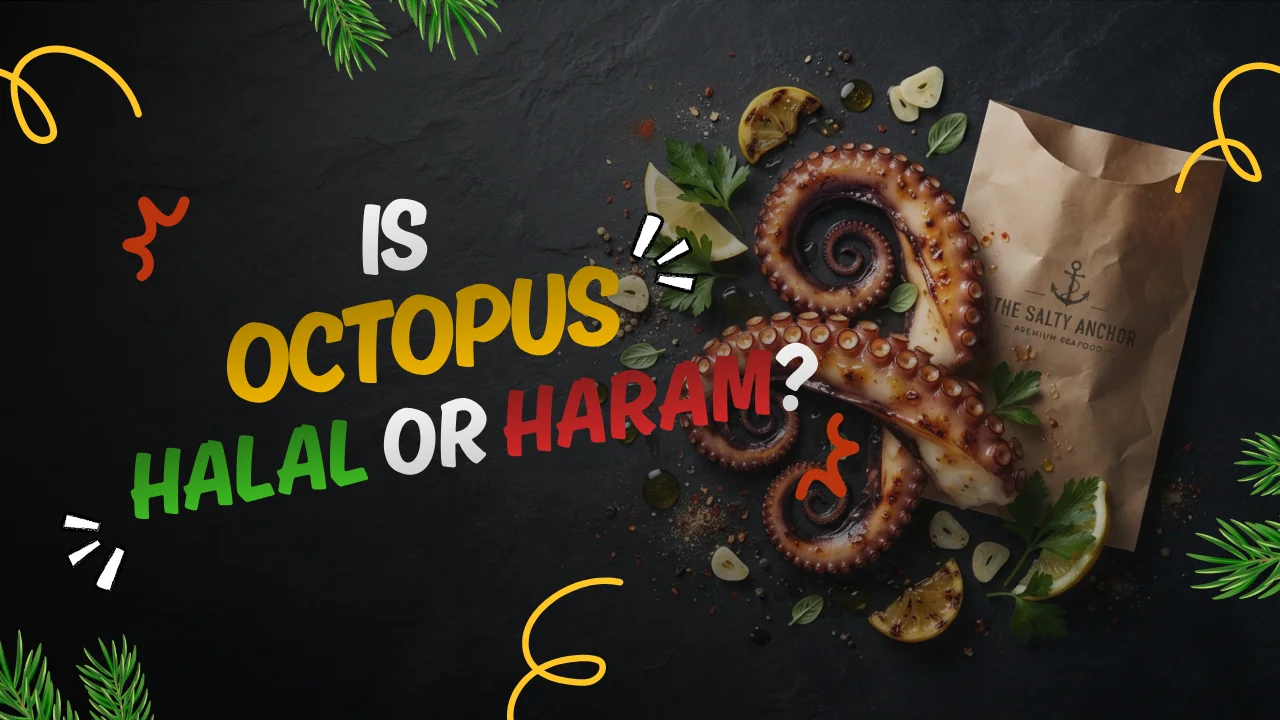
Octopus follows a similar pattern to squid and other non-fish seafood halal by majority opinion, disputed under Hanafi jurisprudence, though even Hanafi scholars are split on how strict the ruling should be. This article breaks down the details.
What Does Halal Mean?
Halal is an Arabic word meaning “permissible” under Islamic law. Sea creatures generally don’t require zabiha slaughter, but the schools of Islamic jurisprudence disagree on which sea creatures actually count as permissible seafood — octopus falls into this genuinely disputed category.
Is Octopus Halal? Quick Answer
Short answer: Yes, according to the majority of scholars — but the Hanafi position is more nuanced than a simple no. The Shafi’i, Maliki, and Hanbali schools consider octopus halal seafood requiring no slaughter. Classical Hanafi scholars generally viewed octopus as makruh (disliked) rather than outright haram, and many modern Hanafi scholars now consider it halal.
| Category | Status |
|---|---|
| Shafi’i School | Halal |
| Maliki School | Halal |
| Hanbali School | Halal |
| Classical Hanafi Position | Makruh (disliked), not outright haram |
| Contemporary Hanafi Position | Many modern scholars say halal |
| Requires Slaughter? | No |
Why Do Shafi’i, Maliki, and Hanball Schools Consider Octopus Halal?
These three schools agree that all sea creatures are halal, a position supported by Quranic verses on the permissibility of food from the sea. Under this reasoning, octopus is treated the same as fish, shrimp, and other seafood — fully halal with no additional conditions and no requirement for slaughter, since it’s a sea creature rather than a land animal.
What Does the Hanafi School Say About Octopus?
The Hanafi position is more nuanced than a flat prohibition. The Hanafi school restricts permissible seafood mainly to fish or creatures with scales, and classical Hanafi scholars considered octopus makruh (disliked) rather than haram (forbidden) — a meaningfully softer classification than outright prohibition. Importantly, many modern Hanafi scholars have moved toward permitting octopus as halal, similar to the shift seen with shrimp, reflecting ongoing contemporary scholarship on marine creatures beyond the classical “fish only” standard.
Why Do Muslims Question Octopus’s Halal Status?
- The makruh vs. haram distinction is often lost — many sources oversimplify the classical Hanafi position as a flat prohibition when it’s actually a lesser classification
- Contemporary scholarship has shifted — as with shrimp, modern Hanafi opinion increasingly permits octopus, but this update hasn’t reached everyone
- Preparation methods vary — dishes like grilled or fried octopus may involve alcohol-based marinades or sauces that need separate checking
How to Decide Whether to Eat Octopus
- If you follow Shafi’i, Maliki, or Hanbali fiqh, octopus is considered halal without conditions
- If you follow Hanafi fiqh, understand that the classical position is makruh (disliked, not forbidden), and check with a contemporary scholar since many modern authorities now permit it
- Consult your local imam or trusted scholar for guidance specific to your school and community
- Separately check any marinade, sauce, or preparation method for alcohol content or cross-contamination
- Don’t assume octopus is automatically prohibited under Hanafi fiqh — the classical ruling is softer than a flat “haram”
Read: Is Balsamic Vinegar Halal?
Read: Is Rabbit Halal?
Read: Is Calamari Halal?
Read: Are Oysters Halal?
Read: Is Crab Halal?
Frequently Asked Questions
Conclusion
Octopus is considered halal by the majority of Islamic scholars, with even the traditionally restrictive Hanafi position softening over time. Key takeaways:
- Shafi’i, Maliki, Hanbali: Halal, no conditions
- Classical Hanafi: Makruh (disliked), not outright haram
- Contemporary Hanafi: Many modern scholars now permit it
Follow your own school’s current guidance, and consult a knowledgeable scholar if you’re following Hanafi fiqh and want clarity on the modern position.

One Comment