Is Crab Halal? Islamic Ruling on Eating Crab & Shellfish
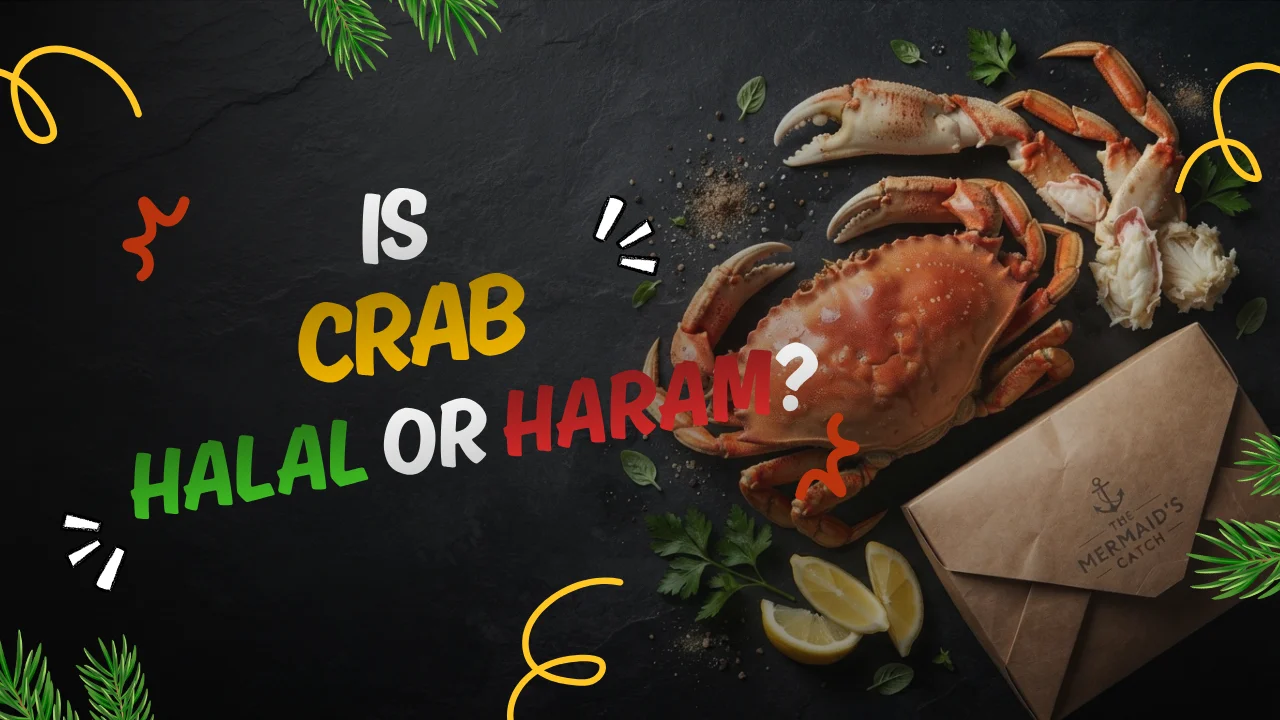
Crab is one of the clearest examples of a seafood item where the halal answer depends entirely on which school of Islamic jurisprudence you follow there’s no single universal ruling. This article breaks down exactly what each madhab says and why.
What Does Halal Mean?
Halal is an Arabic word meaning “permissible” under Islamic law. Unlike land animals, sea creatures generally don’t require zabiha slaughter, but the four Sunni schools (and the Ja’fari/Shia school) disagree on which sea creatures qualify as permissible seafood in the first place — this is where crab’s disputed status comes from.
Is Crab Halal? Quick Answer
Short answer: It depends entirely on your school of thought. The Shafi’i, Maliki, and Hanbali schools permit crab as halal seafood. The Hanafi school generally does not consider crab halal, classifying it as makruh (disliked) or haram since it isn’t a scaled fish. The Ja’fari (Shia) school considers crab definitively haram since it lacks scales.
| Category | Status |
|---|---|
| Shafi’i School | Halal |
| Maliki School | Halal |
| Hanbali School | Halal |
| Hanafi School | Not halal — makruh or haram |
| Ja’fari (Shia) School | Haram — fails the “scales” test |
| Requires Slaughter? | No, as with all sea creatures |
Why Do the Shafi’i, Maliki, and Hanbali Schools Permit Crab?
These three schools representing roughly 75% of the global Sunni Muslim population broadly permit all sea creatures based primarily on Surah Al-Ma’idah 5:96, which states that game from the sea is lawful, along with supporting hadith indicating all dead sea creatures are permissible. Under this reasoning, crab, along with shrimp, lobster, squid, and octopus, is halal without additional conditions.
Why Does the Hanafi School Restrict Crab?
The Hanafi school takes the most conservative position on seafood among the Sunni schools, generally restricting halal seafood to fish specifically — creatures with scales that live exclusively in water. Since crab is a crustacean rather than a scaled fish, Hanafi scholars typically classify it as not halal. Many Hanafi scholars specifically use the term makruh (disliked) rather than outright haram, though the practical guidance is usually to avoid it as the safer choice.
Why Does the Ja’fari (Shia) School Prohibit Crab?
The Ja’fari school applies a specific “scales test” to determine which sea creatures are halal. Since crab is a crustacean with a hard outer shell but no scales, it fails this test and is considered definitively haram under Ja’fari fiqh, regardless of any other consideration.
Why Do Muslims Question Crab’s Halal Status?
- No single universal ruling exists — unlike fish, which is halal by consensus across all schools, crab is genuinely disputed
- Same seafood, different verdict depending on madhab — this can be confusing for anyone unfamiliar with the underlying jurisprudential reasoning
- Imitation crab (surimi) adds another layer — even where real crab is accepted, some products use imitation crab made from fish, which carries entirely different considerations
How to Decide Whether to Eat Crab
- Identify which school of Islamic jurisprudence you or your family follows
- If you follow Shafi’i, Maliki, or Hanbali fiqh, crab is generally considered halal
- If you follow Hanafi fiqh, the safer and more commonly recommended approach is to avoid crab
- If you follow Ja’fari (Shia) fiqh, crab is considered haram
- If you’re unsure which school you follow or want personalized guidance, consult a knowledgeable imam from your community
Read: Is Perdue Chicken Halal?
Read: Are Jolly Ranchers Halal?
Read: Is Raising Cane’s Halal?
Read: Is Shrimp Halal?
Read: Is NAYA Halal?
Frequently Asked Questions
Conclusion
Crab’s halal status is genuinely dependent on which school of Islamic jurisprudence you follow, not a single universal answer. Key takeaways:
- Shafi’i, Maliki, Hanbali: Halal
- Hanafi: Generally not halal — makruh or haram
- Ja’fari (Shia): Haram
Follow your own school’s guidance, and consult a knowledgeable local scholar if you’re uncertain which tradition applies to you.