
Is Seafood Halal? Which Seafood Is Halal or Haram in Islam?
Seafood is where halal food guidance splits most sharply by school of thought fish is unanimous, while everything else (shellfish, crustaceans, mollusks) genuinely depends on which madhab you follow. This article is the overview reference tying together the individual seafood articles across this site.
What Does Halal Mean?
Halal is an Arabic word meaning “permissible” under Islamic law. Sea creatures generally don’t require zabiha slaughter under any school that permits them, but the Islamic schools of jurisprudence genuinely disagree on which sea creatures qualify as permissible seafood in the first place this is the central question running through virtually every specific seafood item.
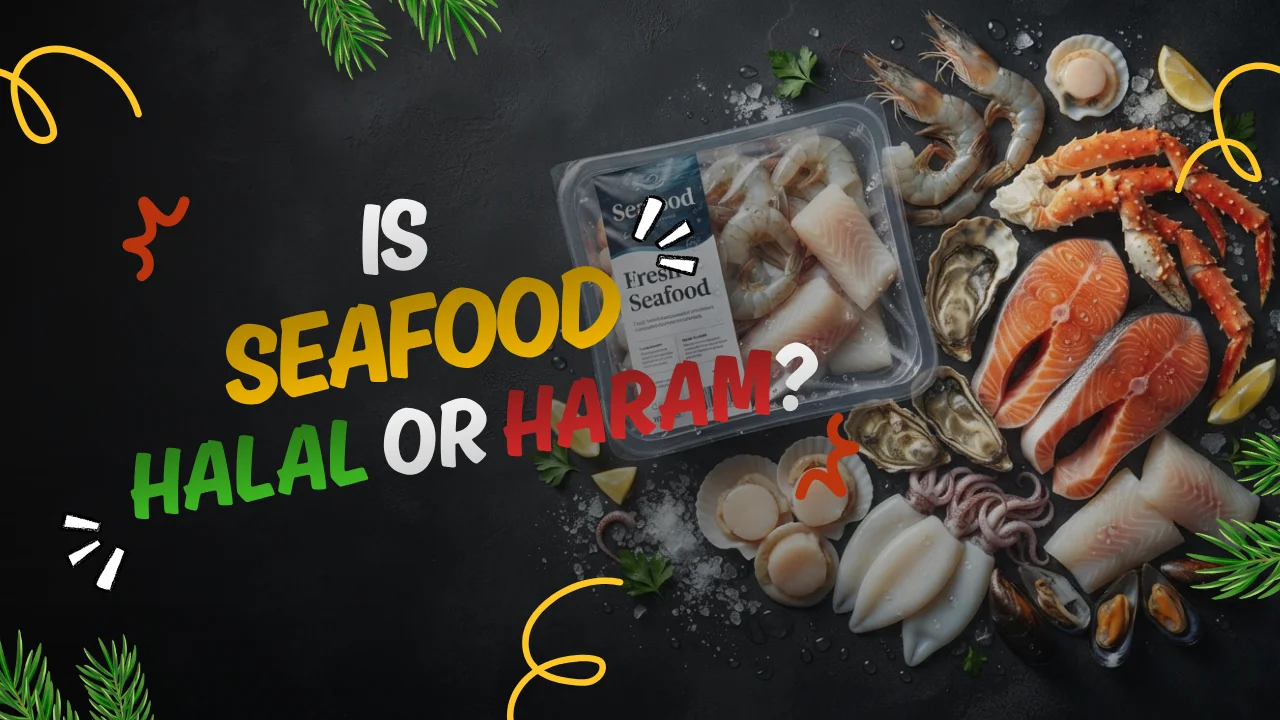
Is Seafood Halal? Quick Answer
Short answer: Fish is halal by unanimous agreement across all four Sunni schools; other seafood (shellfish, crustaceans, mollusks) depends on which madhab you follow. All four Sunni madhabs agree that scaled fish salmon, tuna, cod, trout, tilapia, sea bass, snapper, mackerel are fully halal without dispute. The Shafi’i, Maliki, and Hanbali schools permit all sea creatures, including shrimp, lobster, crab, oysters, mussels, and squid. The Hanafi school generally restricts halal seafood to fish (and, per most contemporary scholars, shrimp), excluding most other shellfish and crustaceans.
| Category | Shafi’i/Maliki/Hanbali | Hanafi |
|---|---|---|
| Fish (all types) | Halal | Halal |
| Shrimp | Halal | Halal (per most contemporary scholars) |
| Crab, Lobster | Halal | Generally not halal |
| Oysters, Mussels | Halal | Generally not halal |
| Squid, Octopus | Halal | Generally not halal (Hanafi: octopus is makruh, not haram) |
Why Is Fish the One Universal Agreement?
Fish holds a unique, unanimous status across every Islamic school of jurisprudence. This is grounded directly in the Quran, which declares food from the sea lawful, and fish specifically doesn’t require ritual slaughter the way land animals do a fish caught from the sea is halal without any zabiha process required. This unanimous agreement makes fish one of the least contested items in all of halal food guidance, unlike virtually every other seafood category.
Why Do the Shafi’i, Maliki, and Hanbali Schools Permit All Seafood?
These three schools representing the large majority of the global Sunni Muslim population ground their position in Surah Al-Ma’idah 5:96, which states: “Lawful to you is the game of the sea and its food, as provision for you and for travelers.” Combined with supporting hadith indicating all dead sea creatures are lawful, this broad Quranic language is interpreted to cover the entire category of sea creatures without further restriction shrimp, lobster, crab, oysters, mussels, squid, and octopus are all halal under this interpretation.
Why Does the Hanafi School Restrict Seafood More Narrowly?
The Hanafi school applies a narrower reading of the same Quranic language, interpreting “the game of the sea” as referring more specifically to what’s commonly recognized as fish (samak in Arabic) rather than every possible sea creature. Under this interpretation, shellfish, crustaceans, and other non-fish marine creatures generally fall outside the permitted category with shrimp being a notable, evolving exception, since most contemporary Hanafi scholars, including major institutions like Darul Uloom Deoband, have shifted toward permitting it specifically.
Are There Individual Exceptions Within the Hanafi Restriction?
Yes, a few genuinely nuanced ones worth knowing. Catfish, despite its scaleless appearance, is specifically treated as halal even under Hanafi fiqh, since scholars recognize it as a special type of fish rather than grouping it with shellfish. Octopus is classified as makruh (disliked) rather than outright haram under classical Hanafi positions, with many modern Hanafi scholars moving toward permitting it. These nuances show that the Hanafi restriction isn’t a single, flat rule applied identically to every non-fish sea creature.
How Should I Decide What Seafood to Eat?
- Identify which school of Islamic jurisprudence you or your family follows
- If you follow Shafi’i, Maliki, or Hanbali fiqh, the full range of seafood — fish, shellfish, crustaceans, mollusks — is generally halal
- If you follow Hanafi fiqh, fish and (per most contemporary scholars) shrimp are halal, while other shellfish and crustaceans are generally not, with specific exceptions like catfish
- For seafood you’re unsure about, check this site’s dedicated articles on specific items (crab, oysters, shrimp, squid, octopus, tuna, catfish) for detailed breakdowns
- Consult a knowledgeable local imam if you’re uncertain which school you follow or want personalized guidance
Why Do Muslims Question Seafood’s Halal Status So Often?
- No single universal answer exists beyond fish — unlike many other food categories, seafood genuinely splits by school of thought
- The Hanafi position has evolved on specific items — shrimp’s status in particular has shifted in contemporary scholarship, creating confusion about which older guidance still applies
- Preparation adds a separate layer of consideration — even where the underlying seafood is accepted, dishes may involve alcohol-based sauces, batters, or shared non-halal cooking equipment
Read: Is Pork Halal?
Read: Is Chick-fil-A Halal?
Read: Is Shake Shack Halal?
Read: Are Snickers Halal?
Read: Is Tyson Chicken Halal?
Frequently Asked Questions
Conclusion
Seafood’s halal status splits sharply between universal agreement on fish and genuine scholarly disagreement on everything else. Key takeaways:
- Fish: Halal by unanimous consensus across all four Sunni schools
- Shafi’i, Maliki, Hanball: Permit all seafood, including shellfish and crustaceans
- Hanafi: Generally restricts to fish and (per most contemporary scholars) shrimp, with specific exceptions like catfish
For detailed guidance on specific seafood items, check this site’s dedicated articles on crab, oysters, shrimp, calamari, octopus, tuna, and catfish, or consult a knowledgeable local scholar for guidance specific to your school of thought.

One Comment