
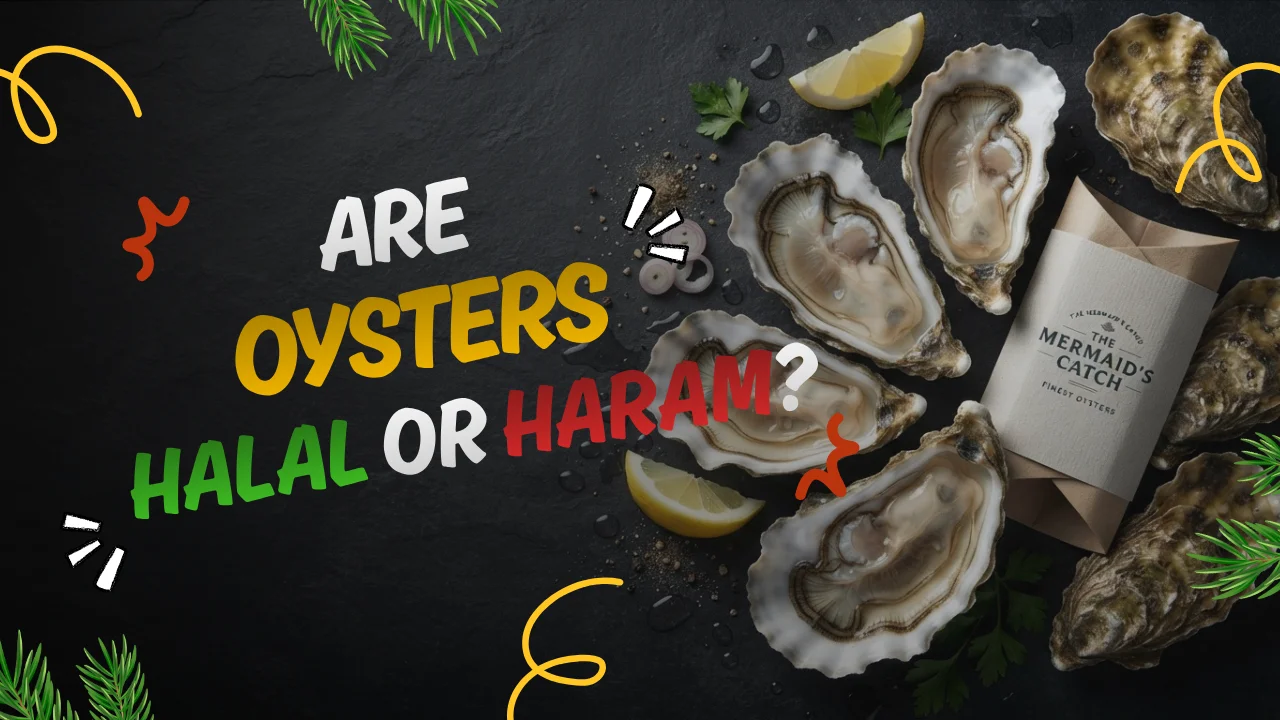
Are Oysters Halal? Islamic Ruling on Eating Oysters & Shellfish
Oysters follow the same madhab-dependent pattern as most non-fish seafood permitted by the majority of Sunni schools, but restricted under Hanafi jurisprudence. This article explains exactly where the disagreement comes from and how to decide based on your own tradition.
What Does Halal Mean?
Halal is an Arabic word meaning “permissible” under Islamic law. Sea creatures generally don’t require zabiha slaughter, but the schools of Islamic jurisprudence disagree on which sea creatures actually qualify as permissible seafood oysters fall squarely into this disputed category.
Are Oysters Halal? Quick Answer
Short answer: Yes, according to the majority of scholars — but not under the Hanafi school. The Shafi’i, Maliki, and Hanbali schools permit all sea creatures, including oysters and mussels, based on Surah Al-Ma’idah 5:96. The Hanafi school generally restricts halal seafood to fish, making oysters impermissible under that tradition.
| Category | Status |
|---|---|
| Shafi’i School | Halal |
| Maliki School | Halal |
| Hanbali School | Halal |
| Hanafi School | Not halal — fish only |
| Requires Slaughter? | No |
| Global Majority Position | Halal (Shafi’i, Maliki, Hanbali represent most Sunni Muslims) |
Why Do Most Schools Consider Oysters Halal?
The Shafi’i, Maliki, and Hanbali madhabs permit all sea creatures without restriction, grounding this position in Surah Al-Ma’idah 5:96, which declares game from the sea and its food lawful, along with supporting hadith affirming all dead sea creatures are permissible. Under this reasoning, oysters, mussels, shrimp, lobster, crab, and squid are all halal without additional conditions, and no slaughter is required since they’re sea creatures rather than land animals.
Why Does the Hanafi School Restrict Oysters?
The Hanafi school takes a narrower view of what counts as permissible seafood, generally limiting halal sea creatures to fish — meaning scaled creatures. Since oysters are mollusks without scales, they fall outside this definition under Hanafi jurisprudence and are generally considered not halal, along with most other shellfish and crustaceans.
Why Do Muslims Question Oysters’ Halal Status?
- No single universal ruling — unlike fish, which is agreed upon across all schools, oysters are a genuinely disputed category
- Confusing terminology — some sources describe the Hanafi position as “makruh” (disliked) rather than fully haram, which can create ambiguity
- Raw consumption adds another consideration — oysters are often eaten raw, which is separate from the halal/haram question but worth noting for some observers
How to Decide Whether to Eat Oysters
- Identify which school of Islamic jurisprudence you or your family follows
- If you follow Shafi’i, Maliki, or Hanbali fiqh, oysters are generally considered halal
- If you follow Hanafi fiqh, the more commonly recommended approach is to avoid oysters
- If you’re uncertain which school applies to you, consult a knowledgeable imam from your community
- Note that this ruling applies specifically to the oyster itself — any accompanying sauces or preparation methods (such as alcohol-based mignonette sauce) should be checked separately
Read: Is Rice Wine Halal?
Read: Is Jollibee Halal?
Read: Is Seafood Halal?
Read: Is Pork Halal?
Read: Is Chick-fil-A Halal?
Frequently Asked Questions
Conclusion
Oysters’ halal status depends on which school of Islamic jurisprudence you follow. Key takeaways:
- Shafi’i, Maliki, Hanbali: Halal
- Hanafi: Generally not halal — fish-only seafood standard
Follow your own school’s guidance, and check any accompanying sauces separately for alcohol content.

One Comment