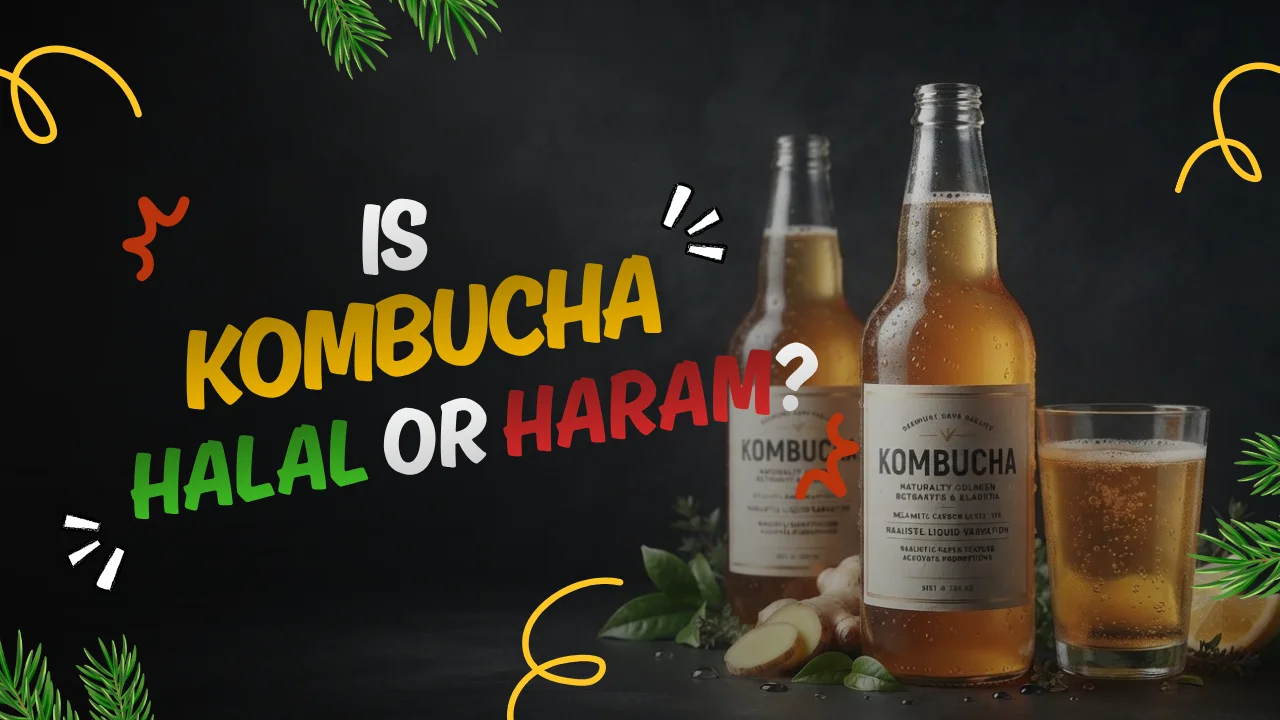
Is Kombucha Halal? Alcohol Content, Ingredients & Islamic Ruling
Kombucha sits in a genuinely interesting middle ground its alcohol is naturally occurring rather than deliberately added, which shifts the majority scholarly ruling toward permissibility, unlike mirin or sake. This article breaks down the fermentation process, the alcohol threshold, and the specific products to avoid.
What Does Halal Mean?
Halal is an Arabic word meaning “permissible” under Islamic law. For fermented beverages specifically, many contemporary scholars distinguish between alcohol that’s naturally occurring as a trace fermentation byproduct (potentially acceptable in small amounts) and alcohol that’s deliberately produced or added as the primary characteristic of a drink (generally prohibited regardless of amount).
Is Kombucha Halal? Quick Answer
Short answer: Yes, according to the majority of scholars, provided the alcohol content stays below approximately 0.5% ABV. During fermentation, the SCOBY (Symbiotic Culture of Bacteria and Yeast) produces trace ethanol naturally, without alcohol being intentionally added.
Commercially available kombucha typically contains less than 0.5% ABV, which most scholars, including the Hanafi school, consider non-intoxicating and therefore permissible.
| Category | Status |
|---|---|
| Standard Commercial Kombucha (under 0.5% ABV) | Halal — majority position |
| Home-Brewed Kombucha | Potentially haram/doubtful — alcohol content unverified, may exceed 0.5% |
| Hard Kombucha (4-8% ABV) | Haram — clearly alcoholic |
| Alcohol Source | Natural fermentation byproduct, not intentionally added |
Why Do Most Scholars Consider Standard Kombucha Halal?
The key principle here is that alcohol produced from sources other than dates or grapes can be used in food and drink production, provided it cannot lead to intoxication, the end product itself (not the alcohol) is what’s being consumed, and the product isn’t a defining characteristic associated with immoral behavior.
Store-bought kombucha, typically containing under 0.5% alcohol, meets these conditions according to the majority of Islamic scholars, including the Hanafi school — making purchasing, selling, and drinking standard commercial kombucha permissible.
Is There a Minority Opinion Against Kombucha?
Yes. Some scholars hold that kombucha isn’t halal because its alcohol comes from deliberate fermentation, distinguishing it from the trace, unintentional alcohol found in something like bread or overripe fruit.
Under this view, the fact that kombucha is intentionally fermented specifically to produce the beverage — even if the resulting alcohol content is low — makes it meaningfully different from truly incidental alcohol traces. This remains a minority position relative to the majority ruling.
Is Home-Brewed Kombucha Different from Store-Bought?
Yes, and this matters practically. Home-brewed kombucha may exceed the 0.5% alcohol limit that store-bought products typically stay under, since home fermentation conditions (time, temperature, sugar content) aren’t standardized or tested the way commercial production is.
Without laboratory testing, home-brewed kombucha’s actual alcohol content is unverified, making it haram or doubtful depending on how it was made and how long it fermented.
What About Hard Kombucha?
Clearly haram — this isn’t a gray area at all. Hard kombucha, produced by continuing the fermentation process further or by adding additional yeast and sugar specifically to boost alcohol content, contains 4% to 8% ABV — well into clearly intoxicating territory. This is a meaningfully different product from standard kombucha and should not be confused with it.
Why Do Muslims Question Kombucha’s Halal Status?
- The word “fermented” causes automatic hesitation — even though the resulting alcohol content is typically very low and non-intoxicating
- Home-brewed vs. commercial products create genuine variability — unlike a standardized commercial product, home brewing lacks consistent alcohol content verification
- Hard kombucha’s existence adds confusion — since it shares the “kombucha” name but is a genuinely different, clearly alcoholic product
How to Drink Kombucha Confidently
- Choose commercially produced kombucha, which typically stays under the 0.5% ABV threshold most scholars consider acceptable
- Check the label specifically to confirm the alcohol content is stated as under 0.5%
- Avoid hard kombucha entirely, since it’s clearly and substantially alcoholic (4-8% ABV)
- Be cautious with home-brewed kombucha unless you can verify the alcohol content, since fermentation time and conditions can push it above the acceptable threshold
- If you prefer to follow the stricter minority opinion, avoid kombucha entirely regardless of alcohol content, given its intentional fermentation process
Frequently Asked Questions
Conclusion
Standard commercial kombucha is halal according to the majority of Islamic scholars, based on its typically low, naturally-occurring alcohol content. Key takeaways:
- Commercial kombucha (under 0.5% ABV): Halal — majority position, including the Hanafi school
- Home-brewed kombucha: Potentially doubtful — alcohol content isn’t verified or standardized
- Hard kombucha: Haram — 4-8% ABV, clearly alcoholic
Choose commercially produced, standard-strength kombucha with a confirmed low alcohol content, and always avoid hard kombucha varieties entirely.