Is Mirin Halal? Alcohol Content, Ingredients & Islamic Ruling
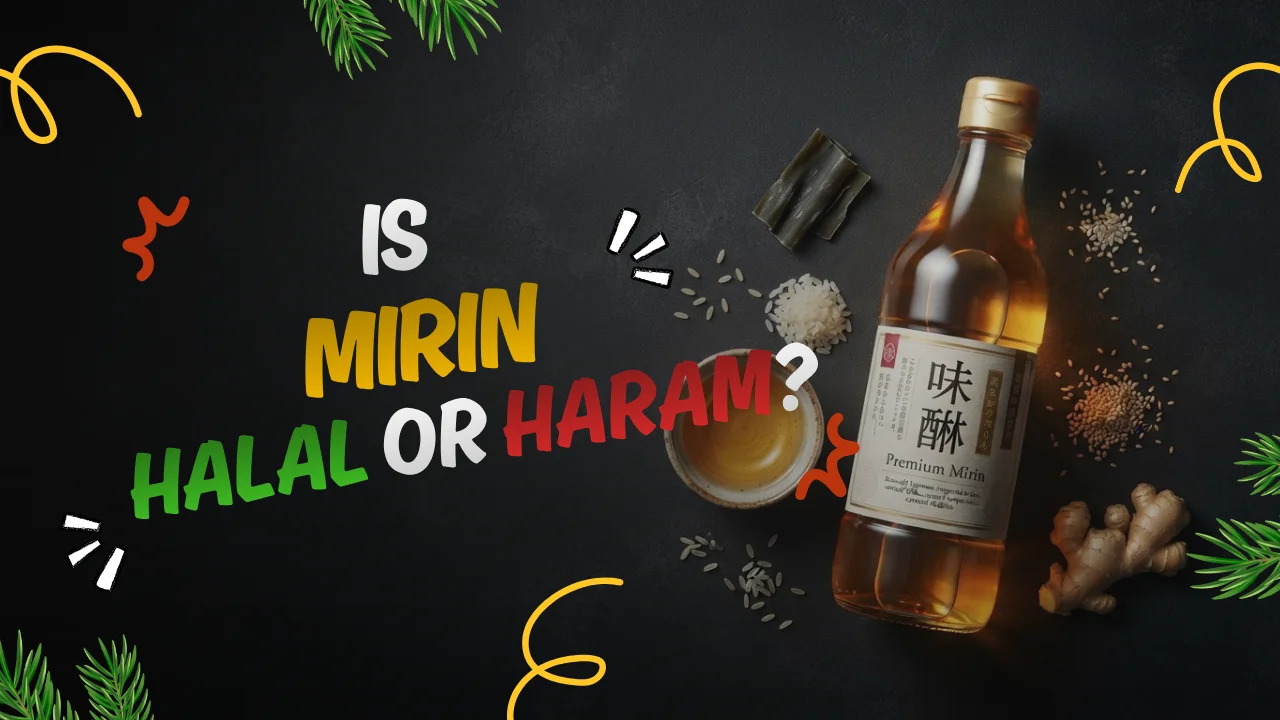
Mirin is a clear-cut haram case according to the mainstream Islamic position, despite the common misconception that its alcohol “cooks off” during preparation. This article explains the alcohol content, the mainstream ruling, and the narrow, context-specific minority opinion worth knowing about.
What Does Halal Mean?
Halal is an Arabic word meaning “permissible” under Islamic law. Alcohol (khamr) is prohibited in intoxicating form, and ingredients containing more than a small threshold of alcohol (generally cited around 0.5%) are considered haram by mainstream scholarly consensus. Mirin’s alcohol content sits far above this threshold.
Is Mirin Halal? Quick Answer
Short answer: No, mirin is haram according to the mainstream Sunni position. Mirin contains alcohol from intentional fermentation, typically around 10-14% ABV — well above the widely-cited 0.5% threshold for permissibility.
Most major fatwa bodies (Darul Iftaa New York, IslamQA, MuslimSG, LPPOM MUI) treat it as haram, and using it as a cooking ingredient doesn’t change this status even if some alcohol evaporates during cooking.
| Category | Status |
|---|---|
| Alcohol Content | Approximately 10-14% ABV |
| Mainstream Sunni Ruling | Haram |
| Alcohol Threshold Generally Cited | 0.5% — mirin significantly exceeds this |
| Status When Used in Cooking | Still haram per most fatwa bodies |
| Notable Minority Exception | Muhammadiyah’s Majelis Tarjih (Japan-specific, 2024) |
Why Is Mirin’s Alcohol Content a Problem?
Mirin’s alcohol isn’t a trace fermentation byproduct — it’s intentional and substantial. At roughly 10-14% alcohol by volume, mirin’s alcohol content comes from deliberate fermentation as part of its production as a cooking wine, not an incidental result of some other process.
This places it firmly above the threshold most contemporary scholars use to distinguish negligible, non-intoxicating trace alcohol from meaningfully alcoholic ingredients that remain prohibited regardless of culinary use.
Does Cooking with Mirin Remove the Alcohol Concern?
No, according to the mainstream position. Once a non-halal ingredient like mirin’s alcohol is added to a dish, most major fatwa bodies hold that the dish is no longer considered halal — even though some of the alcohol may evaporate during cooking.
This reflects the broader scholarly consensus that intentionally added alcohol changes a dish’s ruling regardless of subsequent heat treatment, since complete evaporation is rarely achieved in practice anyway.
Is There Any Exception?
Yes, a narrow, specifically-contextualized one. Muhammadiyah’s Majelis Tarjih issued a 2024 fatwa permitting Muslims specifically living in Japan to use mirin as a cooking ingredient when the alcohol fully evaporates during heating, reasoning that the resulting dish is no longer intoxicating.
This is explicitly framed as a contextual ruling addressing practical food-availability constraints for Muslims in Japan, not a broad, general permission applicable everywhere. Most other major fatwa bodies globally continue to treat mirin as haram.
Are There Halal-Friendly Mirin Alternatives?
Yes. Mirin-style seasoning products with very little (under 1%) or no alcohol are available and considered halal by some Muslim consumers, though acceptability can vary depending on your school of thought or preferred fatwa guidance.
A simple, widely-used substitute is combining rice vinegar with sugar to approximate mirin’s sweet, tangy flavor profile without any alcohol content.
Why Do Muslims Question Mirin’s Halal Status?
- The “alcohol cooks off” assumption — this widely-held belief doesn’t match the mainstream scholarly position on intentionally added alcohol
- Mirin’s ubiquity in Japanese and broader Asian cuisine — it appears in many dishes (teriyaki sauce, sushi rice, glazes) without always being obvious from the dish name
- The existence of a genuine, if narrow, minority opinion — this can create confusion about whether the Japan-specific 2024 fatwa applies more broadly than intended
How to Cook and Eat Without Mirin Concerns
- Treat mirin as haram by default, consistent with the mainstream Sunni position from most major fatwa bodies
- Ask directly at restaurants whether a dish’s sauce, marinade, or rice preparation contains mirin
- Substitute rice vinegar combined with sugar for mirin’s flavor profile when cooking at home
- Look for halal-certified, low-alcohol or alcohol-free mirin-style seasoning products if you want the authentic flavor without the concern
- Don’t rely on the 2024 Japan-specific minority fatwa unless it specifically applies to your situation and you’ve consulted your own trusted scholar
Frequently Asked Questions
Conclusion
Mirin is haram according to the mainstream Islamic position, based on its significant intentional alcohol content (10-14% ABV). Key takeaways:
- Mainstream ruling: Haram — alcohol content far exceeds the generally cited 0.5% threshold
- Cooking doesn’t resolve the concern — most fatwa bodies hold the dish remains haram regardless of evaporation
- Narrow exception: A 2024 Japan-specific fatwa permits it in that specific context, but this isn’t a general ruling
For halal-friendly cooking, substitute rice vinegar and sugar for mirin, and always ask restaurants directly about its presence in sauces and marinades.